Block paving joint maintenance
Block Paving Re-sanding in Sudbury
Replace lost jointing sand on your Sudbury driveway with block paving re-sanding suited to the existing paving system. Any loose blocks or recurring movement should be assessed before the joints are refilled.
Your property. Your parking. Your next step.
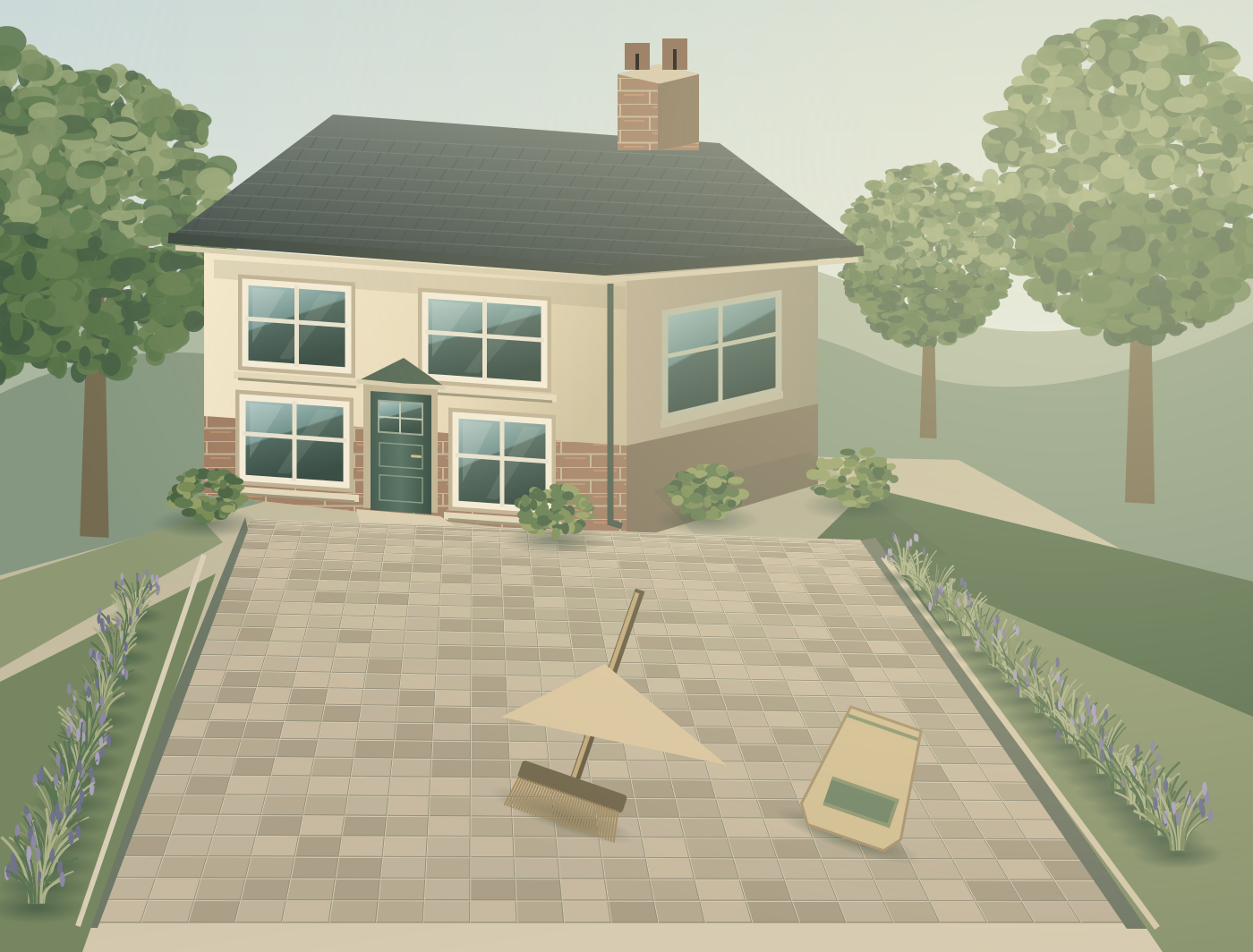
Empty joints or moving paving blocks?
Look for depleted joints while checking whether the blocks themselves are stable. A gap between sound units is different from a rocking block, an open edge or a sunken patch. If movement is present, ask for the cause to be assessed before treating the job as routine replenishment.
Choose the correct jointing material
Conventional flexible block paving commonly uses specified kiln-dried jointing sand, while permeable block paving uses a graded joint aggregate that preserves its drainage route. Other paving systems may have different jointing requirements. Identify the installed system before choosing the product, because replacing permeable joint material with ordinary sand can alter its function. Re-sanding is appropriate only where sand jointing is part of the paving specification.
Further guidance: Permeable paving maintenance guidance.
Clean and prepare the paving joints
Preparation removes weeds, debris and unsuitable loose material so the specified jointing can enter the joints properly. The blocks and edge restraints should be stable before replenishment. For conventional kiln-dried sand jointing, the paving needs suitable dry conditions; other systems have their own requirements. Cleaning and any necessary repairs therefore come before re-sanding, with the preparation included clearly in the agreed work.
Re-sanding and follow-up care
For suitable conventional block paving, re-sanding works the specified dry joint sand into depleted joints, followed by compaction and replenishment as required by the paving system. Loose surplus material is cleared from the surface. Follow-up checks look for joints that need further filling rather than assuming the first pass has settled fully. Later cleaning should preserve the joints, and any movement of the blocks needs separate assessment.
Repair loose blocks before re-sanding
Replenishing joints does not rebuild defective support beneath blocks. If units move or the level has changed, repair may need to come first. Defining that distinction can prevent paying for a maintenance treatment only to discover the paving still rocks or sinks afterwards.
A few useful answers
Questions about block paving re-sanding
Should joints be replenished after pressure washing?
Yes, if suitable joints have lost material. Let the paving reach the condition required for the specified jointing product; sweeping dry sand onto wet paving can prevent proper joint filling.
Is kiln-dried sand right for permeable paving?
Generally not. Permeable block paving normally uses a specified jointing aggregate that lets water through. Confirm the system and required grading before buying replacement material.
Can re-sanding fix sunken blocks?
No. Re-sanding cannot raise settled paving or repair its supporting layers. Restore the levels first, then refill the joints with the correct material for that system.