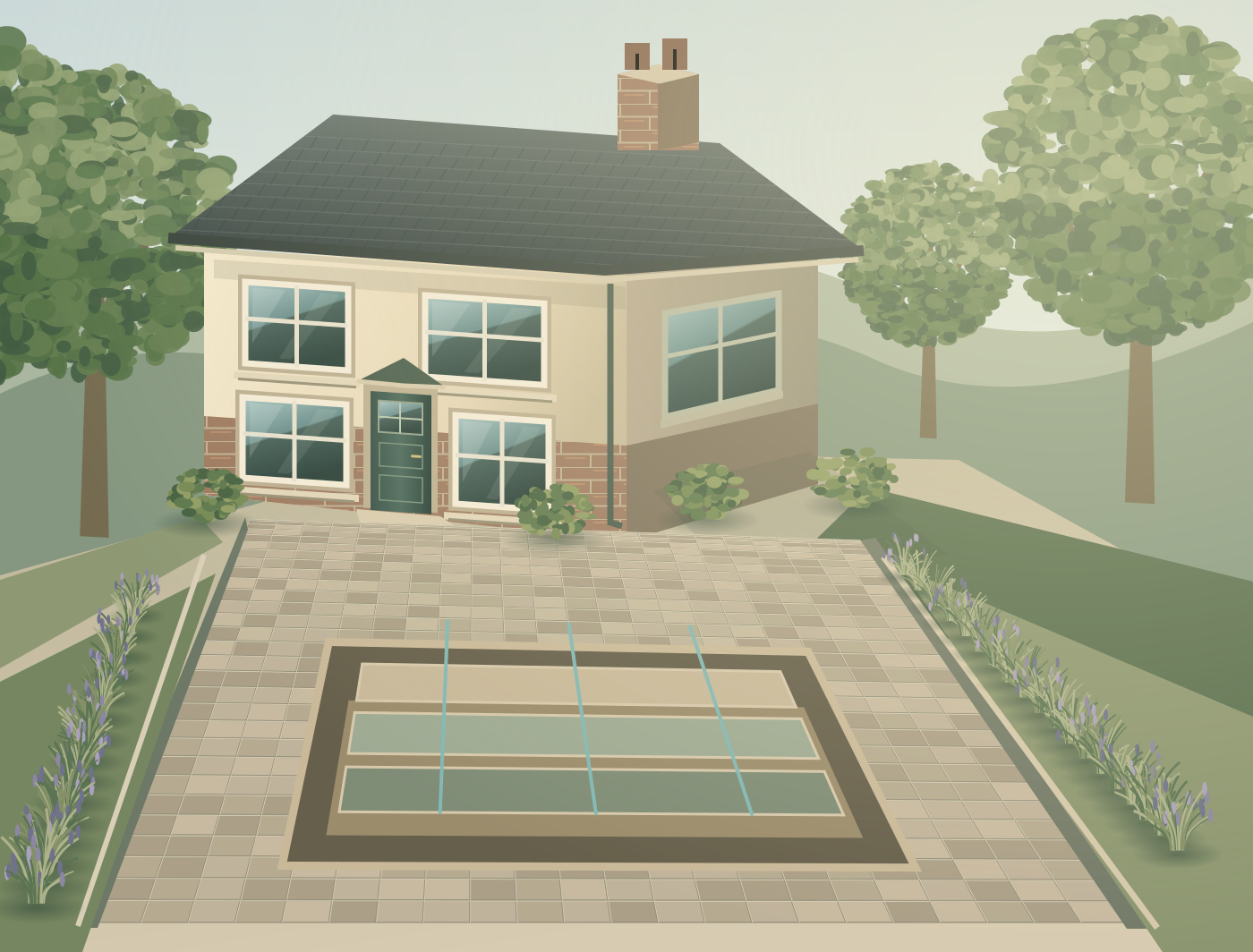
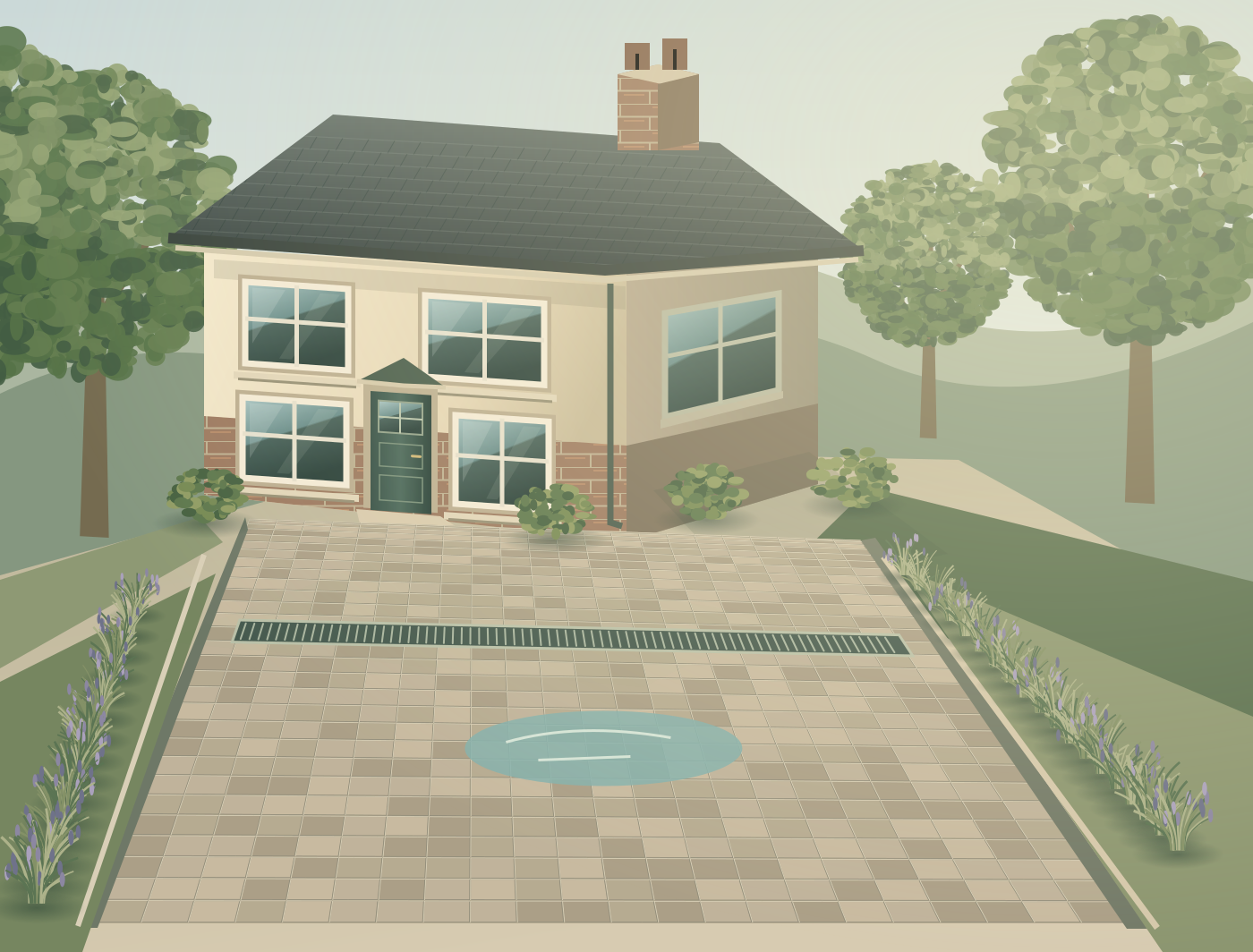
Drain rainwater into suitable ground
Driveway Soakaway Installation in Sudbury
A driveway soakaway can help manage rainwater at your Sudbury property where the ground is suitable for infiltration. Assess the ground and available space before choosing an excavation or drainage product.
Your property. Your parking. Your next step.
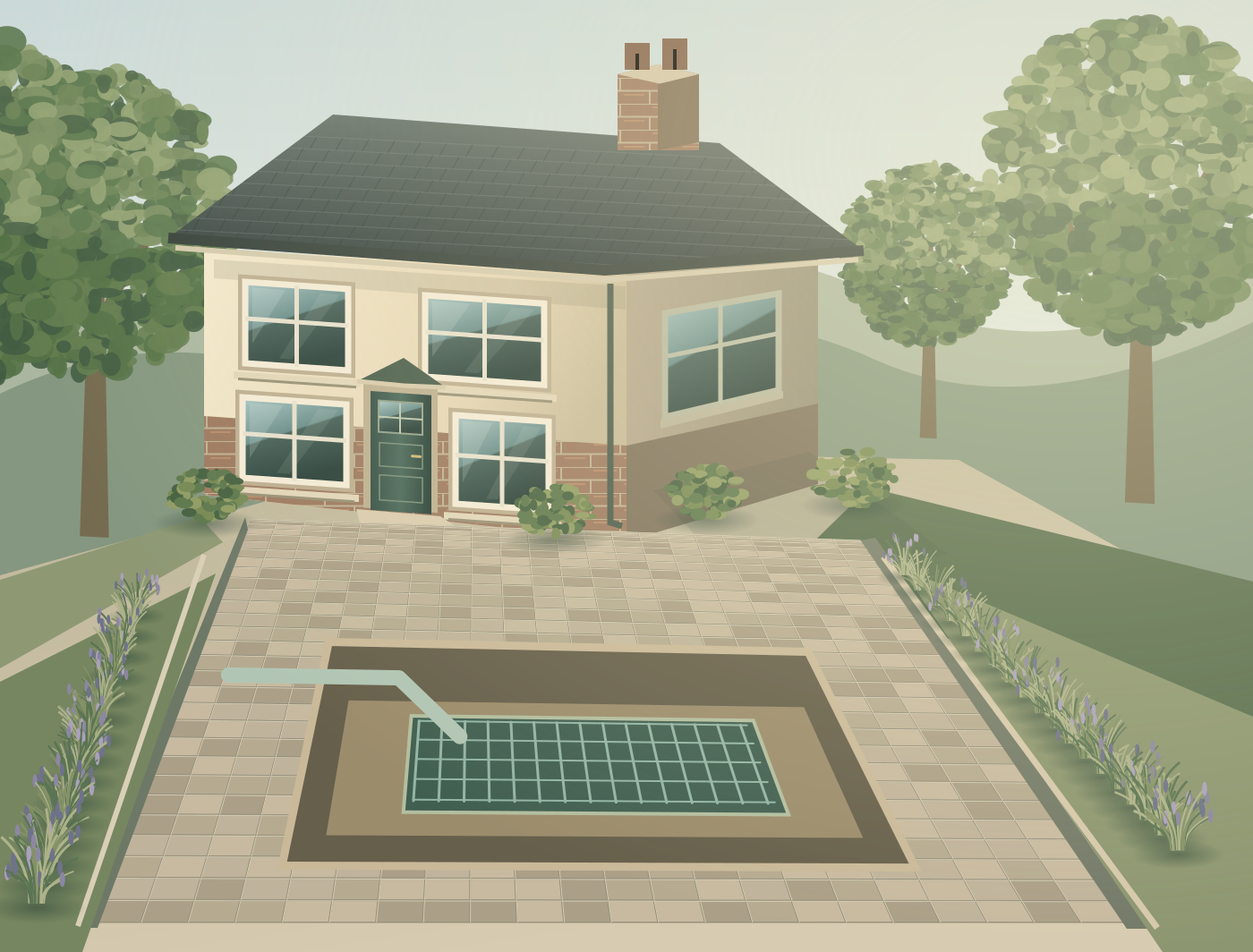
How a driveway soakaway works
A soakaway receives collected water and allows it to infiltrate into surrounding ground. It is a possible part of a driveway drainage system, not a guarantee that every property can dispose of runoff this way. The surface collection arrangement and the destination need to work together.
Ground tests and location checks
Infiltration testing checks how the ground accepts water at the proposed location and informs whether a soakaway is feasible. Groundwater, nearby buildings, boundaries, services and available space also constrain its position and design. An empty garden corner is not automatically suitable. These checks should happen before excavation is committed, because an unsuitable location may require a different drainage approach rather than a larger soakaway.
Rainwater capacity and soakaway design
A soakaway must store incoming runoff while the surrounding ground absorbs it. The area draining to it, rainfall design and measured infiltration performance affect its required capacity and construction. Storage alone cannot compensate for ground that will not accept water adequately. Enlarging a driveway or connecting another runoff source changes the demand, so the system should be reassessed before an extra connection is made.
Excavation and driveway installation
Excavation, connecting pipework and reinstatement need coordination with the driveway installation. Agree who is responsible for each part and how the position affects vehicle use above or nearby. Keep a record of the completed location and layout for maintenance and future work.
Maintenance access and drainage alternatives
Inspection points and any sediment-control features need to remain accessible so restrictions can be identified and cleared appropriately. Persistent backing-up or slow drainage may indicate an obstruction, unsuitable ground or a system that no longer meets the demand. Where infiltration is unsuitable, another assessed drainage route or a revised surface-water design is needed. Sending more runoff into a failing soakaway is not a remedy.
A few useful answers
Questions about driveway soakaways
Can a soakaway work in slow-draining ground?
Only if testing shows the ground can accept the required water. Making the excavation larger does not necessarily overcome poor infiltration; a different drainage design may be needed.
Is testing needed before a design is chosen?
Yes. Ground conditions and infiltration testing inform whether a soakaway is suitable and how it is sized. Existing drainage performance alone does not establish capacity for a new driveway.
Can an existing soakaway take runoff from a larger driveway?
Possibly, but its capacity and condition must be checked against the enlarged catchment. Provide the original design if available and mention any history of slow drainage or overflow.