Stone choice and containment
Gravel Driveways in Sudbury
Create a gravel driveway for your Sudbury property with suitable stone, a stable base and edging to keep it contained. Drainage and comfortable walking routes also need to be part of the design.
Your property. Your parking. Your next step.
Is gravel suitable for your driveway?
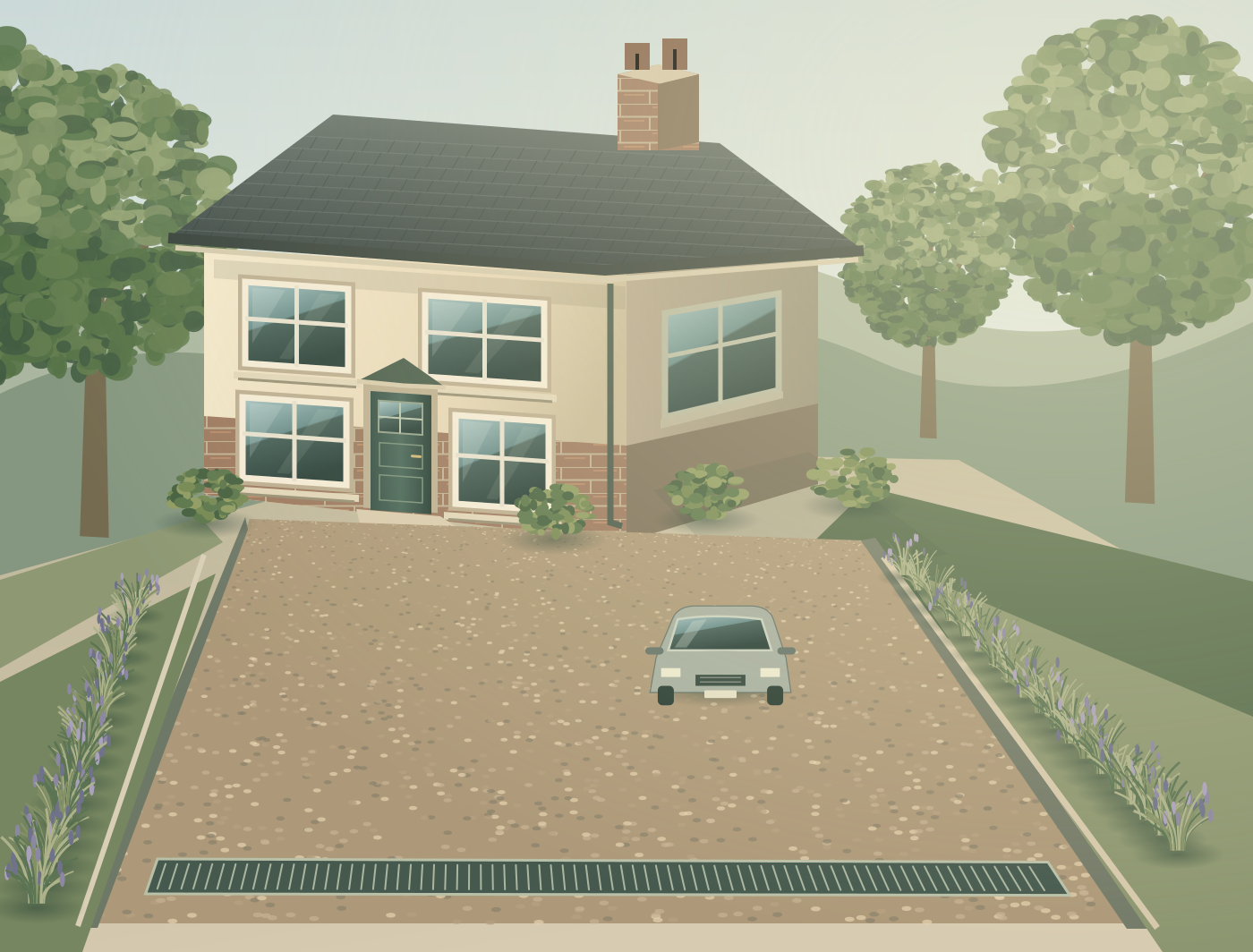
Loose stone can suit an informal entrance or a larger parking area, but its movement is part of the choice. Think about smaller wheels, frequent turning and the point where the driveway meets the pavement. Discuss these requirements before deciding whether loose gravel is the right surface for the whole area.
Choose gravel, edging and stabilisation grids
Gravel choice affects appearance and how the loose surface behaves underfoot and under wheels. Edging helps keep stone within the driveway, while suitable stabilisation grids hold aggregate in cells to limit movement. Grids still need the specified foundation and fill; they do not correct a weak base. Select the aggregate and any grid together, allowing for vehicle turning, pedestrian access and the entrance detail.
Gravel driveway foundations and drainage
A gravel driveway needs a prepared, stable foundation beneath the loose stone so vehicle loads do not simply push aggregate into soft ground. Edges define the area and help retain the finish. Drainage depends on the ground, supporting layers and levels, not just the gaps between stones. Any low areas or unsuitable runoff routes should be addressed before the gravel is spread.
Gravel on slopes and at entrances
Steep sections, narrow entrances and repeated turning can require special attention. A different treatment at the entrance or a separate walking route may be useful, subject to design. If the practical compromises are too great, compare another surface rather than trying to solve every condition with extra gravel.
Installation and gravel maintenance
Installation involves preparing the ground, constructing the supporting layers, fitting any specified edging or grids and spreading compatible gravel to the designed coverage. Routine care then includes raking displaced stone, clearing debris and topping up thin areas where needed. Repeated deep ruts or puddles suggest more than missing gravel and should be investigated before another top-up. Keep the aggregate specification for future matching.
A few useful answers
Questions about gravel driveways
Do gravel driveways always need grids?
No. Grids are an option where greater aggregate stability is needed, not a requirement for every gravel drive. Their usefulness depends on the slope, stone and supporting construction.
How can gravel be kept within the driveway?
Use suitable edge restraints and an entrance detail that limits stone spreading onto adjoining surfaces. If gravel repeatedly escapes in one place, check the levels and vehicle movements before adding more.
Is loose gravel suitable for wheelchairs?
Loose gravel can be difficult for wheelchairs, particularly small front wheels. A firm, smooth access route may be needed even where gravel remains suitable for the main parking area.