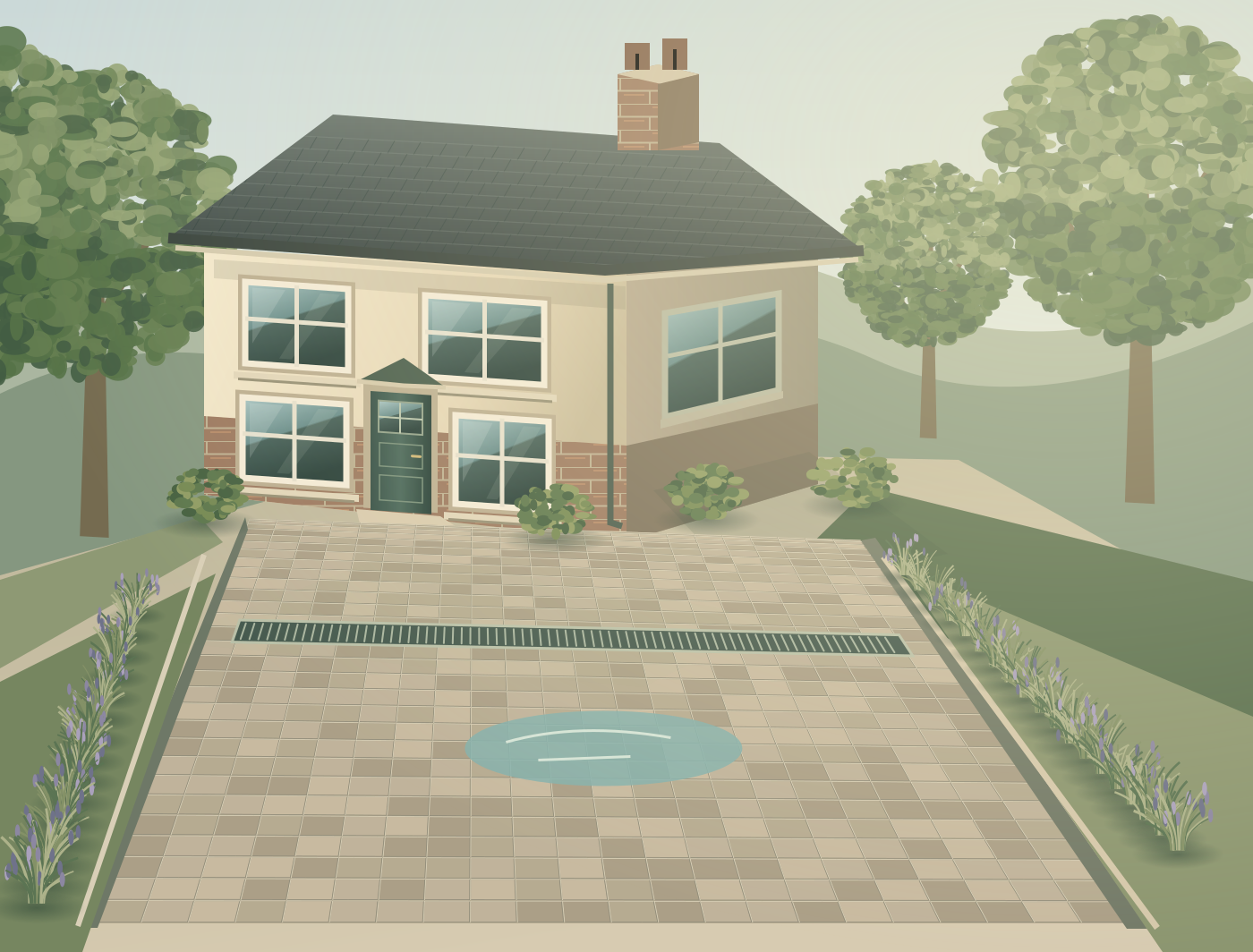
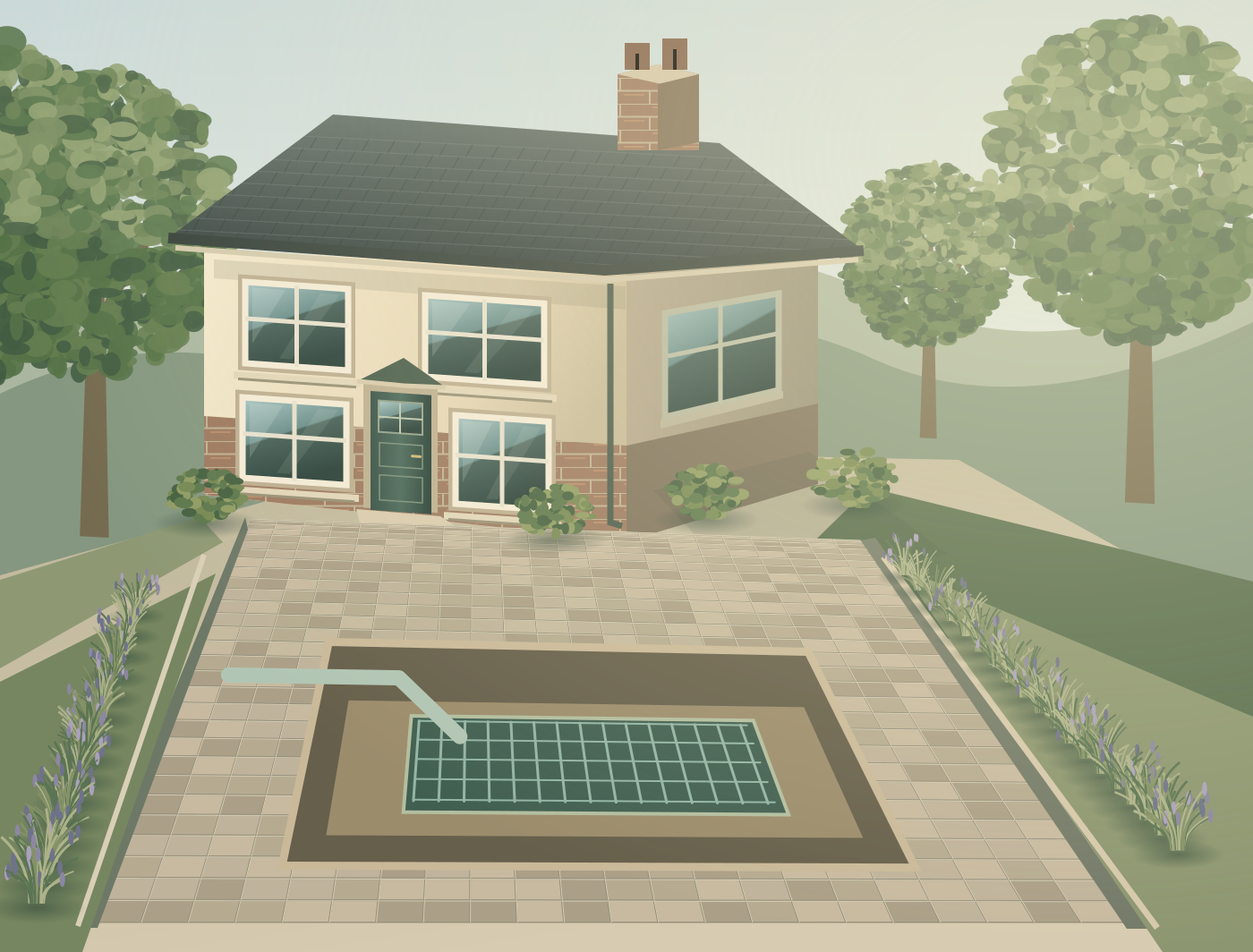
Surfaces that let rainwater through
Permeable Driveways in Sudbury
A permeable driveway lets rainwater pass through the surface, making it an option for managing runoff at your Sudbury property. The complete construction matters, from the chosen finish to the layers below.
Your property. Your parking. Your next step.
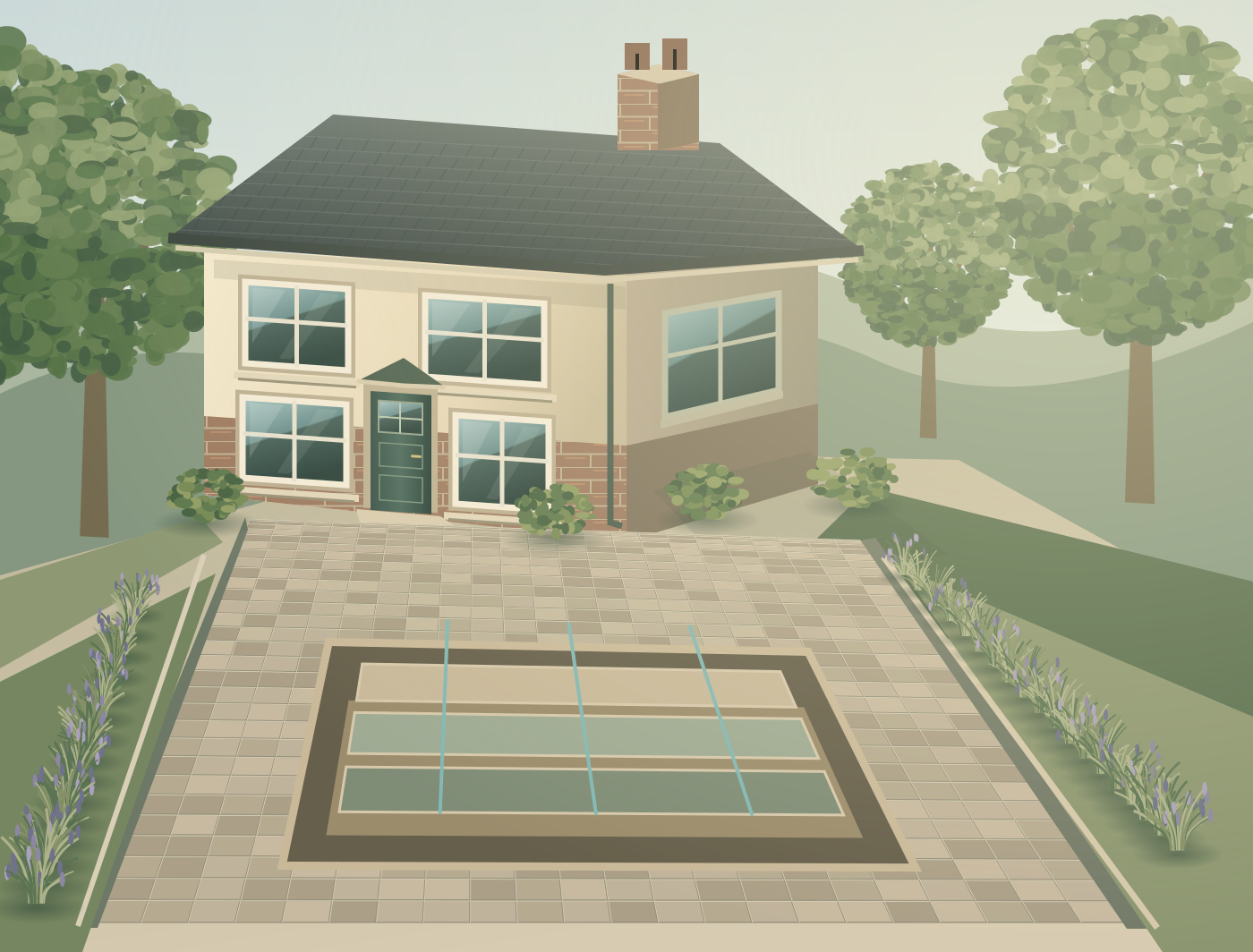
How permeable driveway construction works
A permeable driveway lets rainwater pass through the surface or paving joints into an open supporting construction. Water can be held temporarily within the designed sub-base before soaking into suitable ground or leaving through an assessed outlet. Each layer contributes to that route. A permeable finish placed over an unsuitable base does not create the same drainage system, even if the top layer admits water.
Permeable surface options
Permeable block paving uses joints and specified joint aggregate that allow water into the construction below. Resin bound surfacing can also form part of a permeable driveway when the full system is suitable. Conventional block paving and resin bonded coatings should not be assumed to work in the same way. Choose among feasible systems after establishing the ground conditions, drainage design and expected vehicle loading.
Ground suitability and rainwater storage
A permeable sub-base can temporarily store water in the spaces within its specified aggregate. The required storage and release arrangement depend on the area drained, ground conditions and the design for rainfall. Where infiltration alone is unsuitable, a designed outlet may be needed. Ground and drainage assessment establish those requirements; choosing a deeper-looking foundation without that assessment does not demonstrate adequate storage or discharge.
Further guidance: Interpave permeable paving guidance.
Installation and drainage maintenance
Installation must keep the specified permeable layers and joints free from materials that would obstruct the intended water route. Conventional joint sand or an incompatible coating can change how a particular system drains. Routine care should remove debris and follow the manufacturer's cleaning and joint-maintenance instructions. If water starts pooling, inspect the whole arrangement rather than assuming that more surface washing is the only remedy.
What a permeable driveway quote should include
Compare the surface product, underlying construction, edge details, water route and maintenance together. If the site does not support the proposed approach, review other drainage options rather than forcing the material choice. The objective is a suitable driveway and water-management design, not a particular label.
A few useful answers
Questions about permeable driveways
Is permeable paving the same as ordinary block paving?
No. It uses specified joints and drainage layers beneath the blocks. Keep the installation details: future cleaners or repairers need them to avoid replacing the joint material with unsuitable sand.
Can permeable systems work where ground drains slowly?
Yes, some systems store water and release it through a designed outlet rather than relying entirely on infiltration. The outlet and storage capacity need to be designed for the site.
Can routine re-sanding affect permeability?
Yes. Ordinary joint sand can obstruct a permeable system. Use the aggregate specified for that paving, including when repairing only a small area after cleaning or utility work.