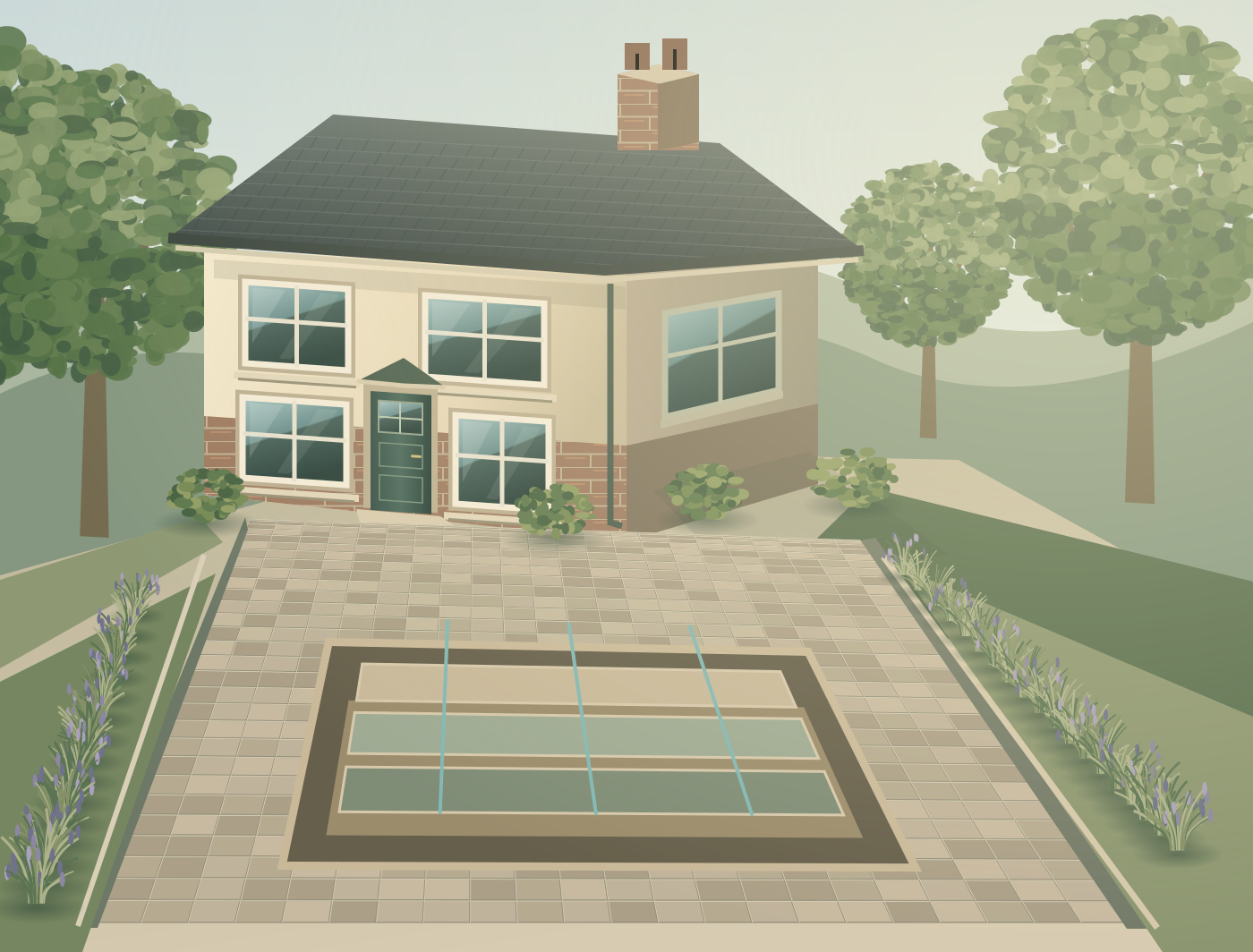
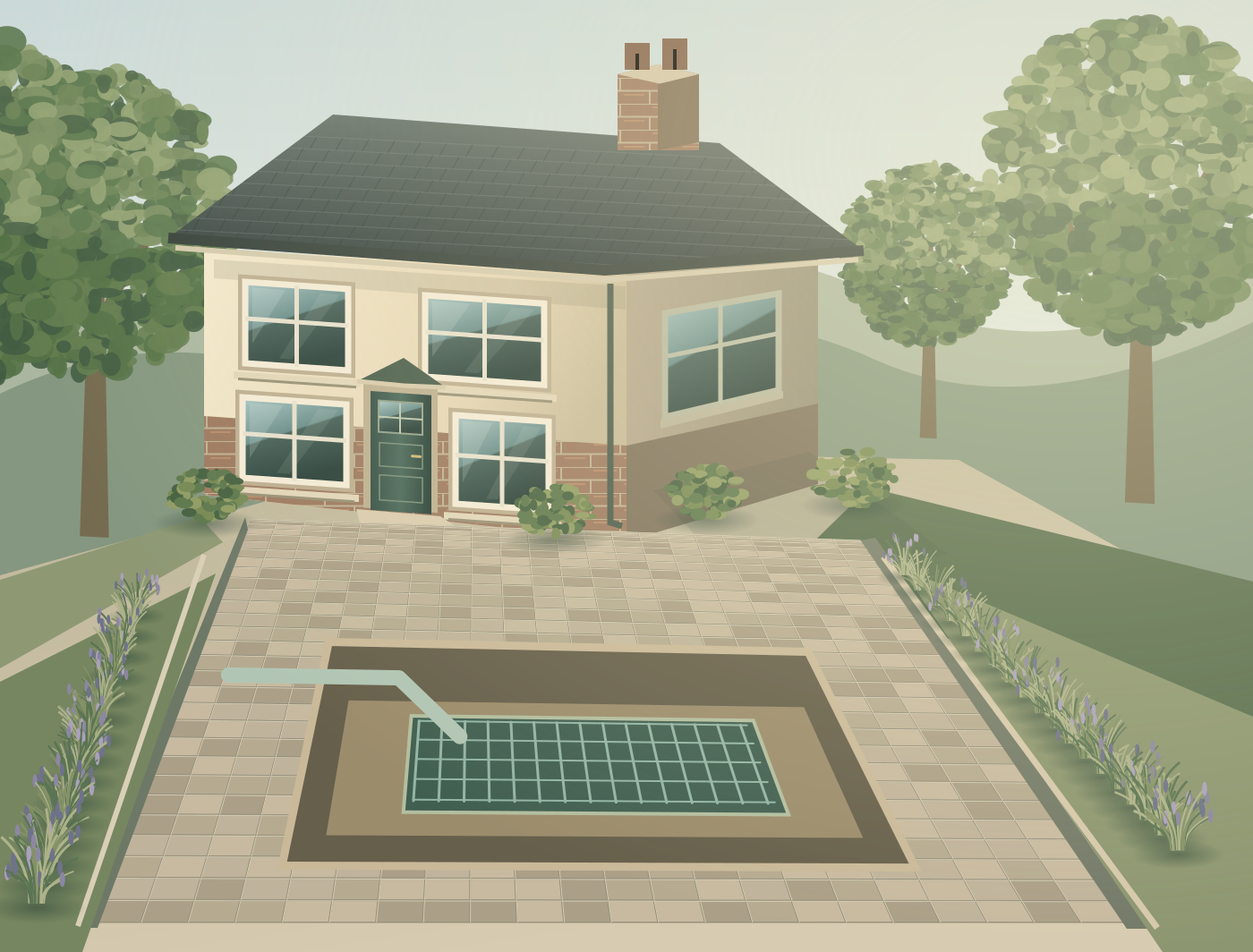
Collect runoff at the surface
Driveway Drainage Channel Installation in Sudbury
Install driveway drainage channels at your Sudbury property to collect runoff and carry it to a suitable outlet. Choose the channel and outlet with driveway levels and vehicle loads in mind.
Your property. Your parking. Your next step.
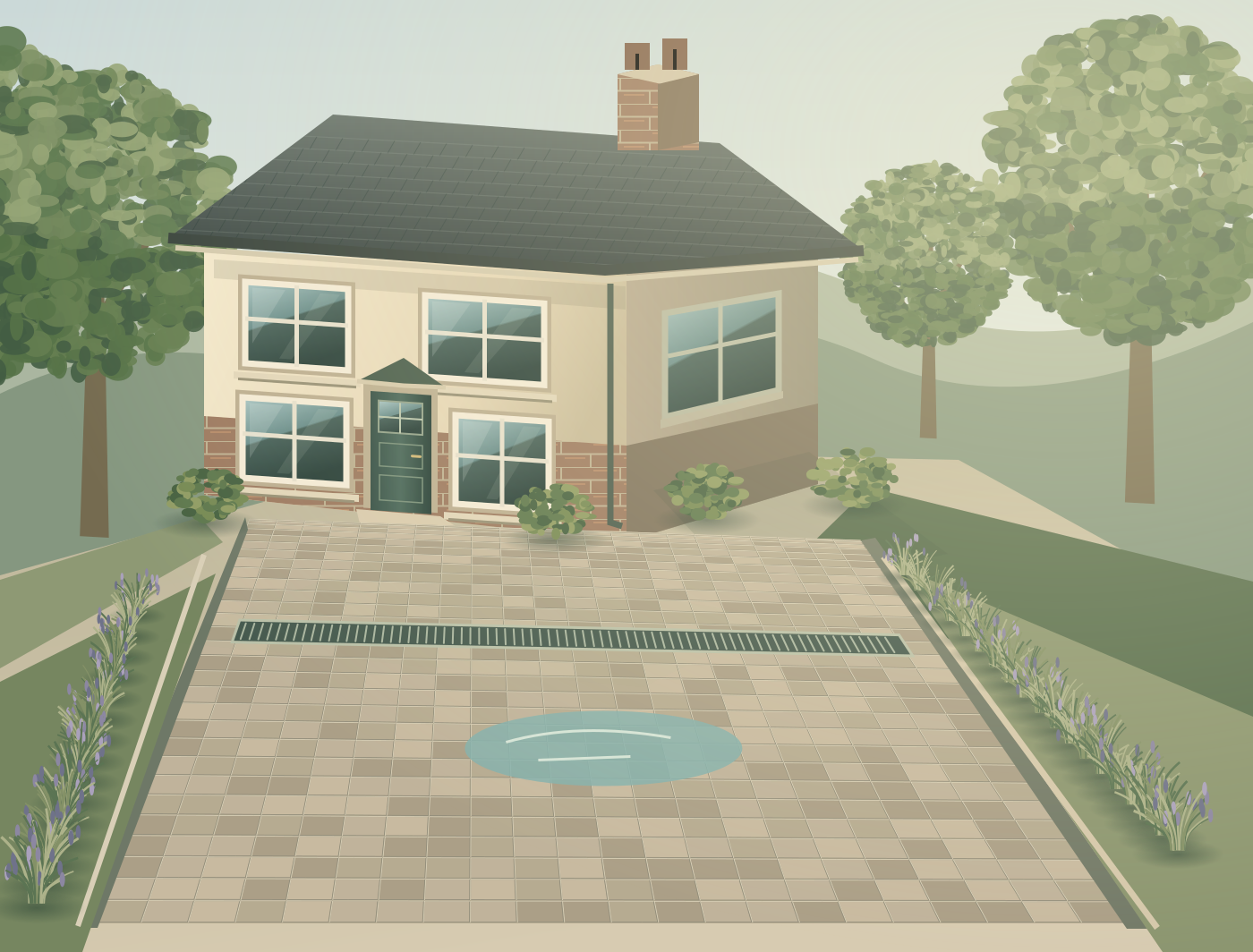
Where drainage channels are needed
Drainage channels collect runoff where driveway falls bring it to a line, such as across the approach to a garage or along a low edge. They are useful only if water reaches the grate and the channel connects to a suitable outlet. Water can bypass a channel that sits above the surrounding low point. The existing levels should determine its position, not appearance alone.
Check driveway falls and the outlet
Driveway falls move water towards the channel, and the connected drainage route carries it onwards. Both parts must work: lowering a grate will not fix a blocked outlet, and a new outlet will not collect water stranded elsewhere on the surface. A soakaway may be suitable where site assessment supports infiltration. Other connections need their own suitability and permission checks before installation.
Channel placement and load ratings
A channel crossed by vehicles needs a product and installation detail rated for that use, including suitable support around the channel body. Grates must also suit the walking route and sit correctly against the finished surface. Turning areas, driveway edges and garage thresholds can impose different constraints. Select the load rating and construction for the traffic, then choose the grate appearance within those requirements.
Fit channels into a new or existing driveway
Retrofitting can involve cutting and reinstating the existing driveway as well as making the outlet connection. Agree the affected area and likely appearance of the repair. For a new drive, coordinating the drain with levels and surfacing from the outset can make the detail clearer.
Keep channels accessible for cleaning
Keep channel grates clear of leaves and loose debris, and ensure removable covers or access points remain reachable for maintenance. Internal sediment and outlet obstructions may need appropriate cleaning. If water still pools after the accessible channel is clear, the problem may lie in the outlet, capacity or surrounding falls. Inspect the full drainage route before replacing a working channel with a larger one.
A few useful answers
Questions about drainage channels
Where does water from a channel drain go?
It may go to a suitable soakaway or another approved drainage connection. Trace the actual outlet before work starts; an existing pipe is not proof that the destination is suitable.
Can a channel be added in front of an existing garage?
Often, if there is enough depth and a suitable outlet. Check the garage threshold and door clearance, and include cutting and making good the existing surface in the work scope.
Why might water still bypass a channel?
Water may flow around an end, approach below the channel edge or overflow a blocked outlet. Observe it during rain to distinguish bypassing from water backing up inside the channel.